
Insurance Australia Group reported FY26 net profit after tax of A$1.022 billion on A$18.4 billion of gross written premium after 109 weather events, and is separately trying to save its RAC Western Australia deal by offering NRMA renewal rights and resilience commitments to the ACCC.
Insurance Australia Group, the country's largest general insurer, closed its 2026 financial year with a profit that came despite a long list of weather events, and it now faces a regulatory test over its planned purchase of RAC Insurance in Western Australia. The two stories are linked: the first shows the strength of IAG's underlying business, and the second shows how much that business wants to grow by acquisition. The facts below come from Insurance Business Australia reports published on October 14 and October 23, 2026. IAG disclosed its results to the Australian Securities Exchange on August 13, so the figures are not new, but the reporting adds useful detail on claims and on the competition process.
A year of weather
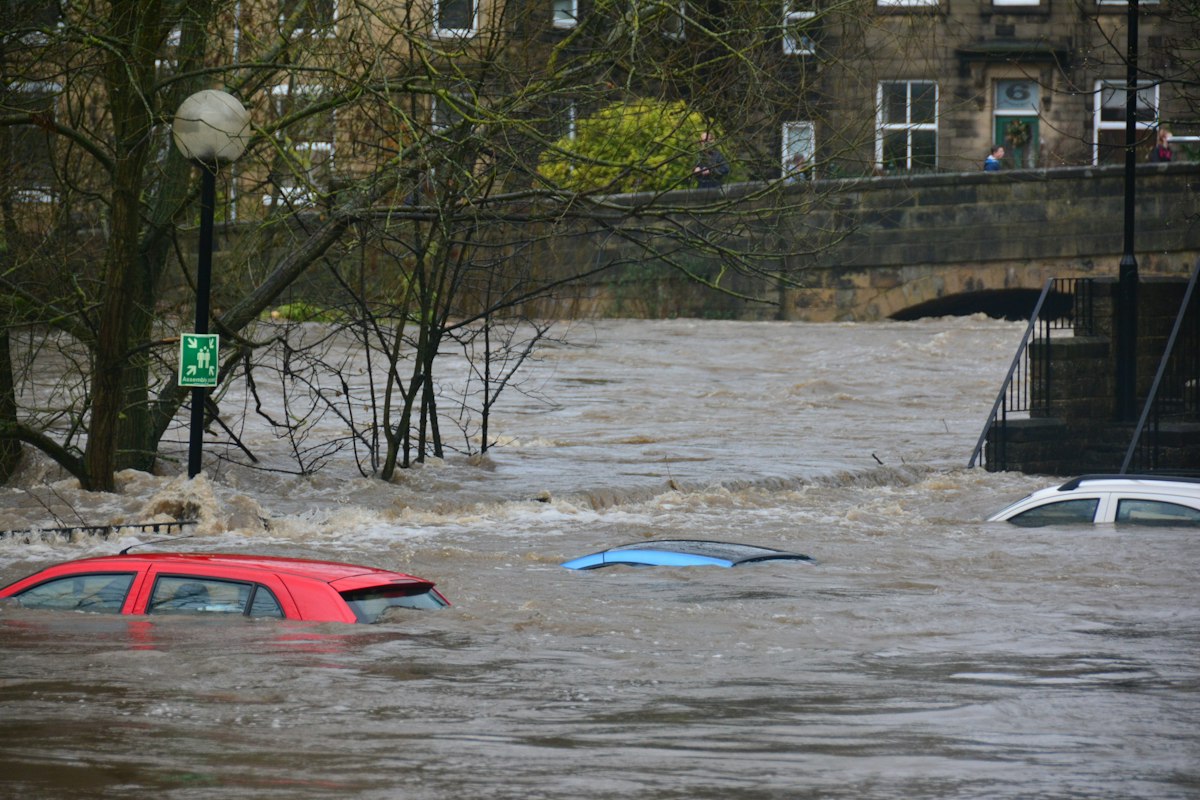
According to the October 23 report, IAG responded to 109 weather events during FY26, 65 in Australia and 44 in New Zealand, and paid A$12.4 billion of claims. Its net natural perils cost was A$1.169 billion, which was below its allowance of A$1.216 billion. Cyclone Alfred in March 2026 added roughly A$200 million to the cost, and the Australian Reinsurance Pool Corporation, the government-backed terrorism and cyclone reinsurance pool, paid out more than A$1 billion in connection with it. The Insurance Council of Australia estimated insured losses at A$4.8 billion in calendar year 2025, which gives context for the scale of the industry's exposure.
Staying under the natural perils allowance is notable because insurers set aside a budget for weather, and a result inside that budget supports margins. On the reported figures, the weather costs, though large in absolute terms, came in slightly below what IAG had allowed for.
The headline numbers
The group reported net profit after tax of A$1.022 billion, gross written premium of A$18.4 billion and an insurance profit of A$1.6 billion. The underlying margin was 15.0%, with a reported margin of 14.7%. Intermediated gross written premium, the business sold through brokers and other intermediaries, rose 1.1% to A$4.6 billion, while direct premium reached A$10.3 billion, up 17.8%. Excluding the RACQ business, which IAG acquired in September 2025, direct premium growth was about 4.5%. That adjustment shows that much of the direct growth came from an acquisition rather than from organic expansion.
Executives spoke about the commercial market and about technology. Jarrod Hill, chief executive of CGU and WFI, described commercial insurance as cyclical, in comments the source summarises only briefly. Chief executive Nick Hawkins said that use of artificial intelligence had passed 80% and pointed to momentum into FY27. The company said its intermediated business was well above its A$250 million insurance profit target.
For FY27 the guidance is gross written premium growth of 5% to 8% and a reported insurance margin of 14.5% to 16.5%. Its longer-term Ambition 2030 targets more than 11 million customers and more than A$25 billion of gross written premium.
The RAC Western Australia deal
IAG's plan to acquire RAC's insurance business in Western Australia is the most visible test of its growth strategy. According to the October 14 report, the Australian Competition and Consumer Commission, which since January 1, 2026 has operated under a mandatory merger regime, opposed the transaction. The report says that, on the ACCC's analysis, IAG would hold about 55% to 65% of Western Australian motor insurance and 50% to 60% of home and contents insurance, which the commission regards as a concentrated position.
In response, IAG lodged a public benefits application and offered a set of commitments. The first and most striking is an offer to transfer renewal rights on active NRMA Western Australia home and motor policies, effectively handing part of its existing customer base to another insurer so that the combined business would not become as dominant. IAG also offered to improve the availability of RAC home insurance north of the 26th parallel, which includes towns such as Karratha, Port Hedland and Broome, where cover can be hard to find. It proposed to invest A$20 million in Western Australian resilience over ten years and said it would accept stronger measures if pricing breaches occur.
IAG says the acquisition would add about A$1.2 billion to annual gross written premium, would be accretive to earnings per share in the first full year, and would produce about A$100 million of annual pre-tax synergies, at a cost of A$15 million to A$25 million a year in integration costs for three years. Those are the company's own estimates and have not been independently verified here.
The process
Applications to the Competition Tribunal were lodged on October 1 and October 5, with a hearing on October 8, according to the report. Filing a public benefits application suspends the ACCC's timetable, and the commission has 50 business days to consider it. IAG has said it expects completion in December 2026. Whether that holds will depend on the ACCC's decision and any further tribunal step.
What to watch
For Western Australian customers, the outcome determines how many choices they have for home and motor cover and how much pricing discipline the market will see. The renewal-rights offer is a signal that IAG is willing to give up some customers to win approval, and the commitment on cover in the north responds to a long-standing concern about availability in cyclone-exposed regions. For the wider industry, the case is an early example of how the new merger rules apply to insurance, and the result may influence how future deals are structured.
This article summarises two trade-press reports and the company's disclosed figures. It is not investment or legal advice, and readers who want to rely on the numbers should refer to IAG's ASX filings and the ACCC's published materials.
Key Points
- 1IAG reported FY26 net profit after tax of A$1.022 billion on gross written premium of A$18.4 billion, with an insurance profit of A$1.6 billion and an underlying margin of 15.0%.
- 2The group responded to 109 weather events (65 in Australia, 44 in New Zealand) and paid A$12.4 billion of claims; net natural perils cost was A$1.169 billion against an allowance of A$1.216 billion.
- 3FY27 guidance is for gross written premium growth of 5% to 8% and a reported insurance margin of 14.5% to 16.5%.
- 4To save its acquisition of RAC Insurance in Western Australia, IAG offered to transfer renewal rights on active NRMA WA home and motor policies after the ACCC opposed the deal.
- 5IAG says the RAC deal would add about A$1.2 billion of annual premium and about A$100 million of annual pre-tax synergies, and it expects completion in December 2026 if approved.
Why This Matters
IAG's results show how an insurer can earn a strong profit in a year of heavy weather by pricing and reinsuring for it, while the RAC dispute shows how competition law now shapes insurance mergers in Australia. Western Australian drivers and homeowners are the ones whose choice of insurer would change if the deal proceeds.
Understand the numbers
- GuideWhat Is a Combined Ratio? How to Read an Insurer's Earnings in Plain English
- GuideHow Much Home Insurance Do You Need? Replacement Cost vs Market Value
- GuideHow to File an Insurance Claim and What to Do if It Is Denied
- CalculatorInsurance Deductible Break-Even Calculator · Compare a low and a high deductible using your own claim odds.
Original Source
Insurance Business Australia (October 14 and 23, 2026) ↗Related Stories

Lemonade, Root, Hippo: Three Insurtechs, Three Paths in Q3
November 15, 2026

Hiscox Grows Premiums 9.5% as Its UK Small-Business Arm Speeds Up
November 15, 2026

Cat Budgets: Reinsurers Used Far Less Than Primary Insurers in 2026
November 14, 2026
Co-operators Swings to Q3 Underwriting Loss as Prairie Storms Hit
November 14, 2026
Daily Intelligence
The PolicyRix Daily Brief
Get the day's key insurance and finance stories in one email, each linked to its original source. No spam. Unsubscribe anytime.
Informational newsletter only. Not financial advice. Disclaimer