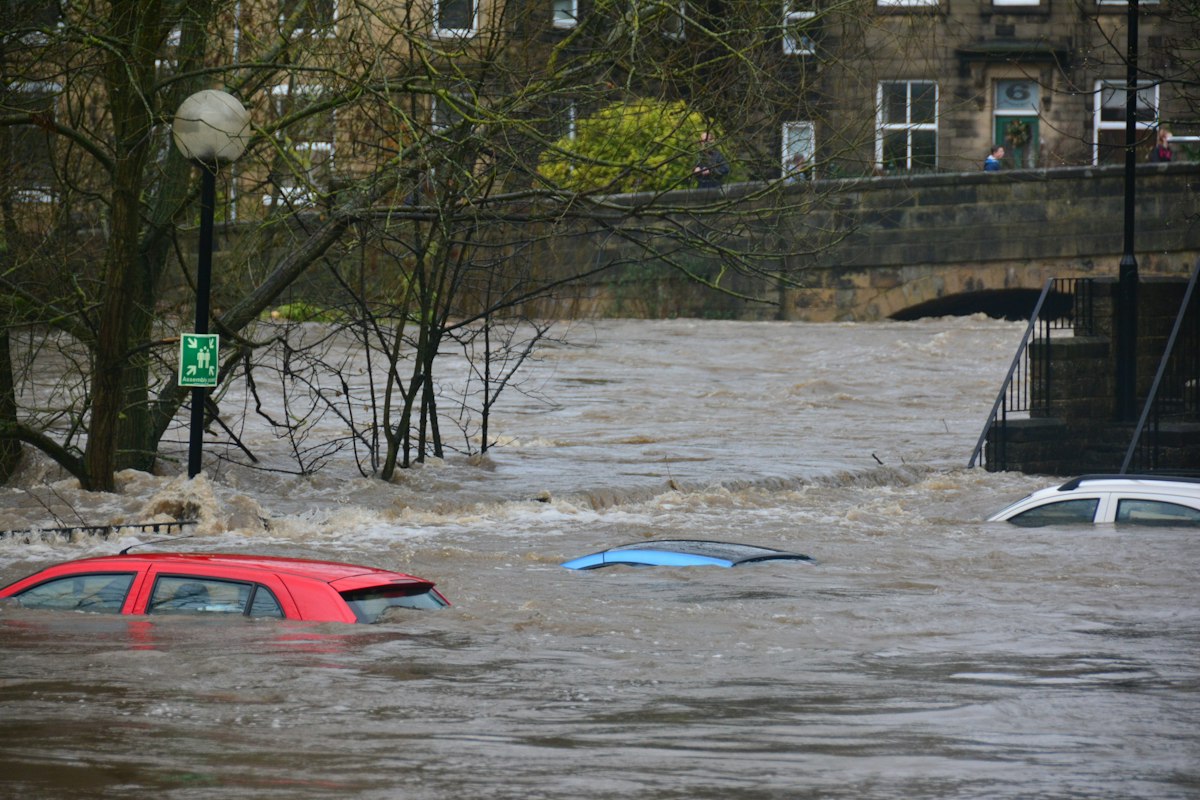
A new Moody's whitepaper warns that the United States faces more than $375 billion in aggregated uninsured residential flood losses from a 1-in-100-year flood scenario, with a national protection gap exceeding 65%. The analysis, featured in Insurance Journal's June 22 issue, finds that rarer 1-in-500-year events could push uninsured exposure above $1 trillion, posing a growing credit risk to households and local governments.
The United States is facing a widening and increasingly dangerous gap between its growing flood risk and the take-up of flood insurance, according to a new interactive whitepaper from Moody's, prominently featured in Insurance Journal's June 22, 2026 issue. The analysis estimates that a 1-in-100-year flood event could expose the nation to more than $375 billion in aggregated uninsured residential flood losses, with a national protection gap exceeding 65%.
Authored by Jennifer Chang, Senior Vice-President for Sustainable Finance Credit at Moody's Ratings, and Firas Saleh, Director of North American Flood Models, the report uses the Moody's RMS US Inland Flood HD model to evaluate residential flood exposure at the county level across three scenarios: a 1-in-100-year flood, a more extreme 1-in-500-year flood, and a 1-in-100-year flood under an intermediate-emissions pathway projected to 2050.
A central finding is that the risk is highly concentrated yet broadly distributed. While roughly 90% of US counties are exposed to some level of flood risk, fewer than 2% of counties — spread across 11 states — carry 65% of the nation's uninsured loss exposure. Counties with potential uninsured losses exceeding $5 billion are clustered in Florida, Louisiana, South Carolina, and Texas — all states Moody's classifies as having moderate-to-high credit exposure to physical climate risk. In rarer 1-in-500-year events, total uninsured exposure could triple to more than $1 trillion, with the protection gap exceeding 70% and high-loss counties extending into inland states like Pennsylvania and Illinois.
A key structural driver of the protection gap is FEMA's Special Flood Hazard Area (SFHA) maps, which are primarily based on riverine flooding and generally do not account for storm surge, sea level rise, or extreme precipitation. Since mortgage underwriters use these maps to determine whether a property must carry flood insurance — provided primarily through the National Flood Insurance Program (NFIP) — many homeowners face significant uninsured exposure they may not even recognize. Moody's points to Hurricane Helene in September 2024, where rainfall near Asheville, North Carolina exceeded a 1-in-1,000-year return period and the flood protection gap in Buncombe County reached approximately 88%. Although private flood policies have roughly doubled since 2020, they still represent only about 10% of total policies in force, and NFIP policy counts have declined by a comparable amount, leaving the national protection gap largely unchanged. Moody's projects that uninsured exposure could rise about 25% by 2050, to around $472 billion, if take-up and resilience investment remain static.
Key Points
- 1A 1-in-100-year flood could expose the US to more than $375 billion in uninsured residential losses
- 2The national flood insurance protection gap exceeds 65%, per Moody's RMS modeling
- 3Counties with over $5 billion in potential uninsured losses are concentrated in Florida, Louisiana, South Carolina, and Texas
- 4A 1-in-500-year event could push uninsured exposure above $1 trillion with a 70%+ protection gap
- 5Private flood policies remain just ~10% of policies in force despite doubling since 2020
Why This Matters
Flood is the most common and costly natural disaster in the United States, yet it remains chronically underinsured. For homeowners, the protection gap means catastrophic out-of-pocket losses after a major flood — often outside officially mapped flood zones. For local governments, large uninsured losses translate into fiscal strain and growing credit risk. For insurers and reinsurers, the data highlights both an enormous unmet protection need and a significant opportunity for private flood market expansion.
Related Stories

Wall Street Hits Record High as Soft US Data Keeps Rate Path Uncertain
August 6, 2026

Fed Holds Rates Steady Amid Three Dissents, Signals a Hike May Be Coming
August 6, 2026

Warsh Reshapes Fed Communication and Weighs Fewer Policy Meetings
August 6, 2026

US Mortgage Rates Stay Stuck in the High-6% Range
August 6, 2026
Daily Intelligence
The PolicyRix Daily Brief
Get the top 5 insurance and finance stories every morning, curated and verified by our editorial desk. No spam. Unsubscribe anytime.
Informational newsletter only. Not financial advice. Disclaimer