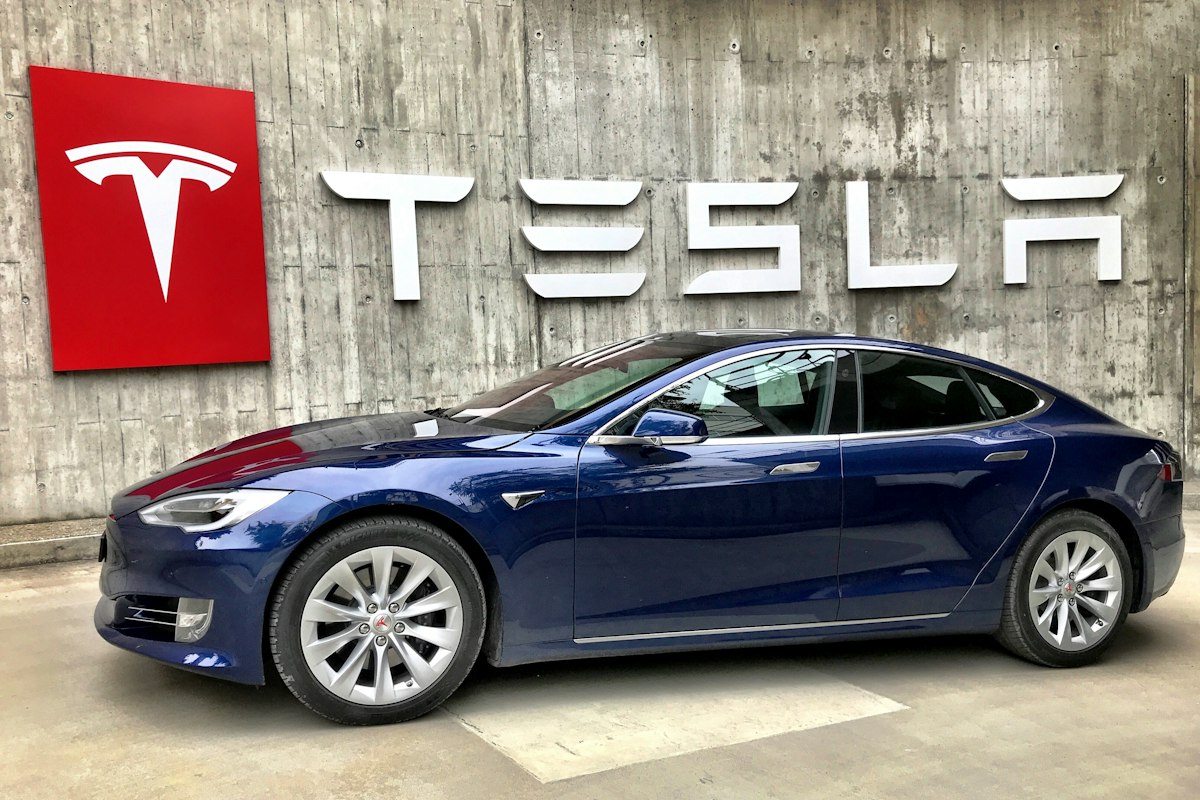
Lemonade launched insurance for Tesla drivers using Full Self-Driving (Supervised) in Arizona on January 26, 2026, at about 50% off per-mile rates when FSD is engaged; its second-quarter results showed in-force premium of $1.43 billion, up 32%, and management still expects its first positive adjusted EBITDA quarter in Q4 2026.
Lemonade, the insurer built around artificial intelligence, has made one of the clearest bets yet that self-driving features will change how car insurance is priced. In January 2026 it launched cover specifically for drivers of Tesla vehicles who use the company's Full Self-Driving (Supervised) system. Its latest results, for the second quarter of 2026, show a company growing quickly and narrowing its losses while still aiming to reach its first profitable quarter by the end of the year. The facts below come from Lemonade's own press release of January 21, 2026 (distributed by BusinessWire), its second-quarter shareholder letter filed with the US Securities and Exchange Commission, and Coverager's reports of the fourth-quarter 2025 and second-quarter 2026 results. All amounts are in US dollars.
Start with the product. According to the company's release, Lemonade Autonomous Car insurance launched in Arizona on January 26, 2026, followed about a month later by Oregon and then Colorado. It offers about 50% off per-mile rates for miles driven with Tesla's Full Self-Driving (Supervised) engaged, and the data on when the system is engaged comes through a technical collaboration with Tesla. 'Supervised' means that the driver must stay attentive and ready to take control, so this is cover for driver-assistance software, not for a car that drives itself without a person responsible. Lemonade's ordinary car insurance operates in Arizona, California, Colorado, Illinois, Indiana, Ohio, Oregon, Tennessee, Texas and Washington, according to the same release.
The pricing logic is that a vehicle's software records detailed data, so an insurer can separate miles driven by the person from miles driven with the assistance system on. If the system reduces certain kinds of crashes, the insurer can charge less for those miles. Whether it does is a question the data has yet to answer. The second-quarter shareholder letter gives no update on how many autonomous policies Lemonade has written or how they have performed. It mentions the product only in its forward-looking statements and lists the pricing of Full Self-Driving (Supervised) as a risk factor, which suggests that changes in Tesla's own pricing or terms could affect the economics. In the absence of claims data, the launch remains a bet.
Now the company's financial picture. In the fourth quarter of 2025, Coverager reports in-force premium of $1.23 billion, up 31%, and 2,984,513 customers, up 23%, with a net loss of $21.7 million, a 28% improvement. The combined ratio including marketing was 138.6% in that quarter, against 184.4% a year earlier. A combined ratio above 100% means an insurer pays out and spends more than it earns in premium.
By the second quarter of 2026, according to Coverager and the shareholder letter, in-force premium had reached $1.43 billion, up 32% from a year earlier, and customers numbered 3,308,666, up 23%, with about 166,000 added in the quarter. Premium per customer was $433, up 8%. Gross profit was a record $113.2 million, up 76%, and gross profit over the previous twelve months was $404 million, up 98%. The gross loss ratio was 60%, compared with 67% a year earlier, and 58% excluding catastrophes. Sales and marketing spending rose to $78 million from $60 million. The net loss was $43 million against $44 million a year before, and cash and investments were about $1.2 billion.
The key question for investors is profitability. The adjusted EBITDA loss in the second quarter was $18.7 million, compared with $40.9 million a year earlier, an improvement of 54%. Management guides to a third-quarter adjusted EBITDA loss of $20 million to $23 million and a full-year loss of $47 million to $51 million, and says it continues to expect its first positive adjusted EBITDA quarter in the fourth quarter of 2026. The guidance for the year implies roughly $8 million of positive EBITDA in that quarter, a calculation in the letter's figures. Guidance for in-force premium is $1.537 billion to $1.540 billion at the end of the third quarter and $1.632 billion to $1.639 billion at year end. Adjusted EBITDA excludes some costs, so it is not the same as net profit.
The car business is a part of this. Car in-force premium was $239 million in the second quarter, with a gross loss ratio of 61%, and Coverager's page says Lemonade Car is available in states representing nearly 50% of the US car insurance market. Car insurance is a large market with established competitors that have vast amounts of data and capital, and regulators are still working out who is liable when a driver-assistance system is engaged. These are risks that the company itself recognises in its filings.
What should readers take from it? For drivers, the product is available only in a few states and only for Tesla owners using the supervised system, and the saving applies per mile with the system engaged, not to the whole policy. For the industry, the product is a test of usage-based pricing for automation. For Lemonade, the next results will show whether growth, falling loss ratios and the promised profit in the fourth quarter arrive together. This article is a news summary and not investment or insurance advice.
Key Points
- 1Lemonade launched Autonomous Car insurance for Tesla Full Self-Driving (Supervised) in Arizona on January 26, 2026, then Oregon, with about 50% off per-mile rates for miles driven with FSD engaged, using data from a technical collaboration with Tesla.
- 2Q2 2026 in-force premium was $1.43 billion, up 32%, with 3,308,666 customers (up 23%); gross profit was a record $113.2 million, up 76%, and the gross loss ratio was 60%.
- 3The adjusted EBITDA loss narrowed to $18.7 million from $40.9 million; management guides to a Q3 loss of $20 million to $23 million and expects a first positive quarter in Q4 2026.
- 4Car in-force premium was $239 million in Q2, with a Q2 car gross loss ratio of 61%; the company said Lemonade Car is available in states representing nearly 50% of the US car insurance market.
- 5The Q2 shareholder letter gives no update on how many policies the autonomous product has written, and lists FSD pricing as a risk factor.
Why This Matters
Lemonade's product is an early test of whether insurers can price self-driving features directly instead of treating every mile alike. Its financial results show whether an AI-first insurtech can turn fast growth into profit.
Related Stories

Aflac's Third-Quarter Net Earnings Drop to $303 Million After $1.1 Billion of Portfolio-Repositioning Losses, While Adjusted EPS Edges Down 2.4% to $2.43 and Japan's Margin Narrows
November 5, 2026

Prudential Financial's Third-Quarter Adjusted Operating Income Falls to $1.32 Billion as the Prudential of Japan Sales Suspension Cuts Japan Earnings 25%
November 5, 2026
Lemonade's Third-Quarter In-Force Premium Jumps 34% to $1.55 Billion and Revenue Rises 73% to $336 Million, With the Net Loss at $43.7 Million and a Positive-EBITDA Quarter Promised for Q4
November 5, 2026

Corebridge Financial's Third-Quarter Operating EPS Rises 27% to $1.22 as the Share Count Falls 17%, With the Equitable Merger Reported to Be Making 'Significant Progress'
November 5, 2026
Daily Intelligence
The PolicyRix Daily Brief
Get the day's key insurance and finance stories in one email, each linked to its original source. No spam. Unsubscribe anytime.
Informational newsletter only. Not financial advice. Disclaimer